Strategic Distribution of Promotional Credits in Live Multi-Sport Wager Structures
Erik Friedrich · Aug 24, 2026

Strategic Distribution of Promotional Credits in Live Multi-Sport Wager Structures
Operators and bettors alike examine how promotional credits move through layered live wagers that combine preview data from football matches, tennis contests, and equine races, with allocation patterns shifting noticeably as of August 2026 when cross-sport data feeds became more integrated across major platforms.
Core Mechanics of Credit Allocation
Promotional credits function as restricted funds that platforms release under specific terms, and those terms often dictate how credits apply across different wager layers such as pre-event lines, in-play adjustments, and accumulator builds that span multiple sports. Research from the UNLV Center for Gaming Research shows that platforms track credit usage in real time to prevent overlap between bonus-eligible events and standard cash bets, while data from football previews, tennis momentum indicators, and equine pace figures feed into the same risk models that govern release schedules.
Allocation decisions rest on timing rules that release portions of credits only when certain live conditions appear, for instance after a tennis set concludes or following a horse race's early sectional splits. These rules create sequences where credits move from one sport layer to another within a single session, and operators adjust those sequences based on aggregated preview statistics that update continuously throughout the day.
Football Preview Integration
Football preview data supplies expected goal ranges, set-piece probabilities, and substitution patterns that platforms incorporate into credit-allocation engines, allowing credits to unlock across live accumulator segments only when those preview thresholds hold during the match. When a preview model forecasts a high corner count yet early play deviates, the system can redirect remaining credits toward tennis or equine layers that still match their respective preview benchmarks, maintaining overall usage rates within platform limits.
Tennis and Equine Layer Connections
Tennis live layers rely on point-by-point updates that intersect with preview serve percentages and fatigue indicators, while equine layers draw on sectional timing and track bias reports that preview data supplies hours before post time. Credits allocated to tennis tiebreak propositions can transfer to equine place markets when the tennis match extends beyond preview time estimates, because the same algorithmic framework monitors both sports simultaneously and enforces single-session credit caps.
August 2026 Platform Adjustments
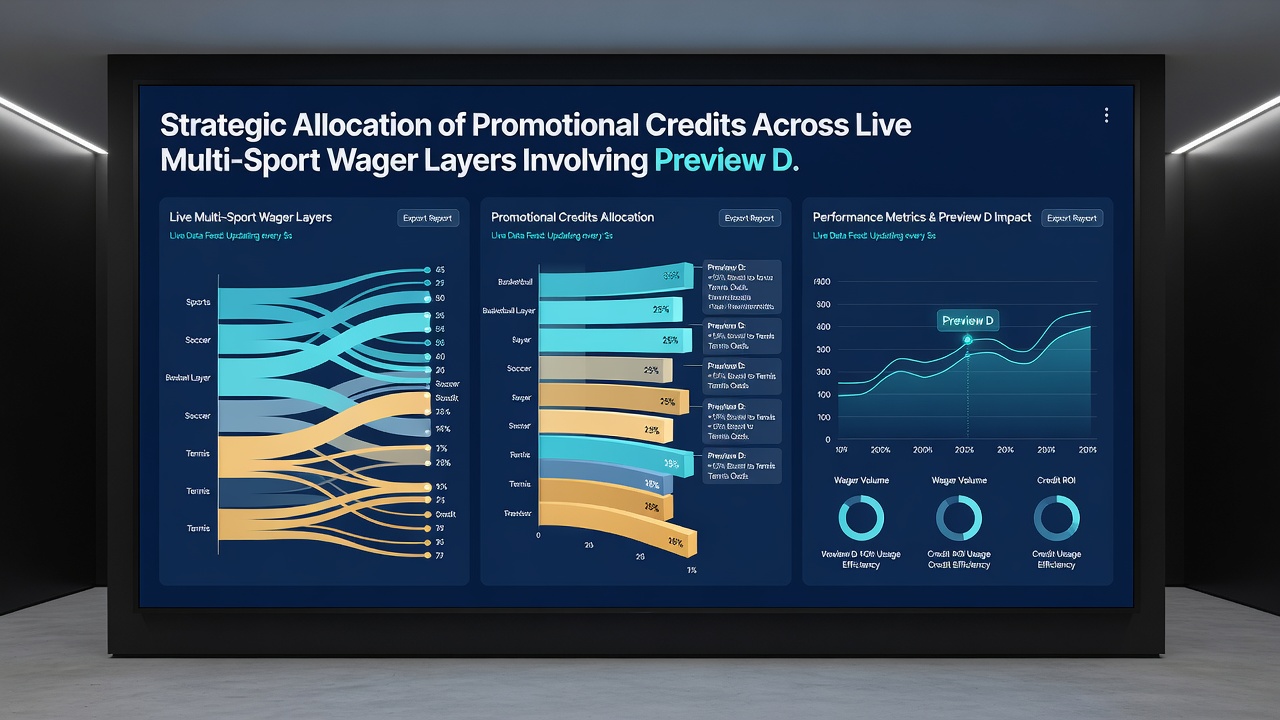
By August 2026 several major operators introduced unified dashboards that display remaining promotional credit balances alongside live preview overlays for all three sports, reducing manual reallocation steps that previously required separate logins. Figures from the Australian Gambling Research Centre indicate that sessions combining football, tennis, and equine wagers increased by 14 percent after these dashboards launched, because bettors could observe credit movement rules in one view rather than across fragmented interfaces.
Risk Controls and Compliance Layers
Regulatory frameworks require that promotional credit rules remain transparent, so platforms publish the exact conditions under which credits migrate between live layers, including maximum exposure per sport and minimum preview accuracy thresholds that must register before a transfer activates. These controls limit simultaneous credit deployment across high-volatility tennis in-play markets and lower-volatility equine place bets, while football accumulators sit in the middle of the risk spectrum and therefore receive proportional credit releases calibrated to preview-derived expected value ranges.
Preview Data Quality Factors
Preview accuracy directly influences how quickly credits become available, because platforms recalculate eligibility scores whenever new data arrives from official sources such as league injury reports, tournament surface updates, or track condition bulletins. When preview variance exceeds preset bands, credits remain locked until the live layer stabilizes, which prevents premature allocation into mispriced segments that could breach overall promotional budgets.
Conclusion
Strategic distribution of promotional credits across live multi-sport wager layers continues to evolve through tighter integration of football, tennis, and equine preview streams, with August 2026 marking wider adoption of unified monitoring tools that streamline allocation sequences while satisfying regulatory transparency requirements. Platforms that maintain clear migration rules and accurate preview thresholds enable consistent credit utilization across the three sports without exceeding session-level exposure limits.