Endurance Echoes: Connecting Racing Track Conditions to Soccer Match Dynamics for Accumulator Construction
Elena Koch · Sep 26, 2026

Endurance Echoes: Connecting Racing Track Conditions to Soccer Match Dynamics for Accumulator Construction
Track conditions in horse racing shift with weather patterns and ground maintenance, while soccer pitches respond to similar environmental factors that alter player movement and stamina levels. Observers note that firmness ratings on racecourses often parallel the hardness or softness metrics recorded on football fields, creating measurable overlaps in how athletes or horses expend energy over distance. Data from multiple racing jurisdictions shows that soft or heavy ground increases stride resistance, much as waterlogged soccer surfaces elevate fatigue rates during extended play periods.
Track Firmness Ratings and Their Direct Measurements
Racing authorities record going descriptions daily, ranging from firm to heavy, and these categories correlate with finishing times across various distances. Researchers at the University of Melbourne documented how a shift from good to soft ground adds an average of 1.8 seconds per furlong for thoroughbreds, a pattern that repeats when soccer analysts examine player tracking data on saturated pitches. Teams operating in leagues across Europe and Australia compile similar pitch reports before matches, allowing cross-sport comparisons that reveal endurance thresholds under comparable conditions.
Soccer Pitch Variables and Player Output Patterns
Professional soccer matches generate extensive metrics on distance covered, sprint frequency, and recovery intervals, with pitch moisture levels emerging as a consistent variable. When groundskeepers report higher water retention, midfielders typically reduce high-intensity runs by 12 to 15 percent after the 60-minute mark, according to figures compiled by sports analytics firms in Canada and the United States. These reductions mirror the energy conservation strategies horses adopt on rain-affected tracks, where jockeys adjust pacing to preserve late-race reserves.
Cross-Sport Data Integration for Accumulator Planning
Analysts combine historical track reports with soccer fixture data to identify days when endurance factors align across events. A soft-ground card at a major racing venue paired with multiple evening soccer matches on wet pitches increases the likelihood that stamina-focused selections will outperform expectations. September 2026 datasets released by the Australian Sports Commission highlighted a 9 percent uptick in late-race position changes on heavy tracks, coinciding with elevated second-half goal tallies in concurrent domestic leagues facing similar rainfall.
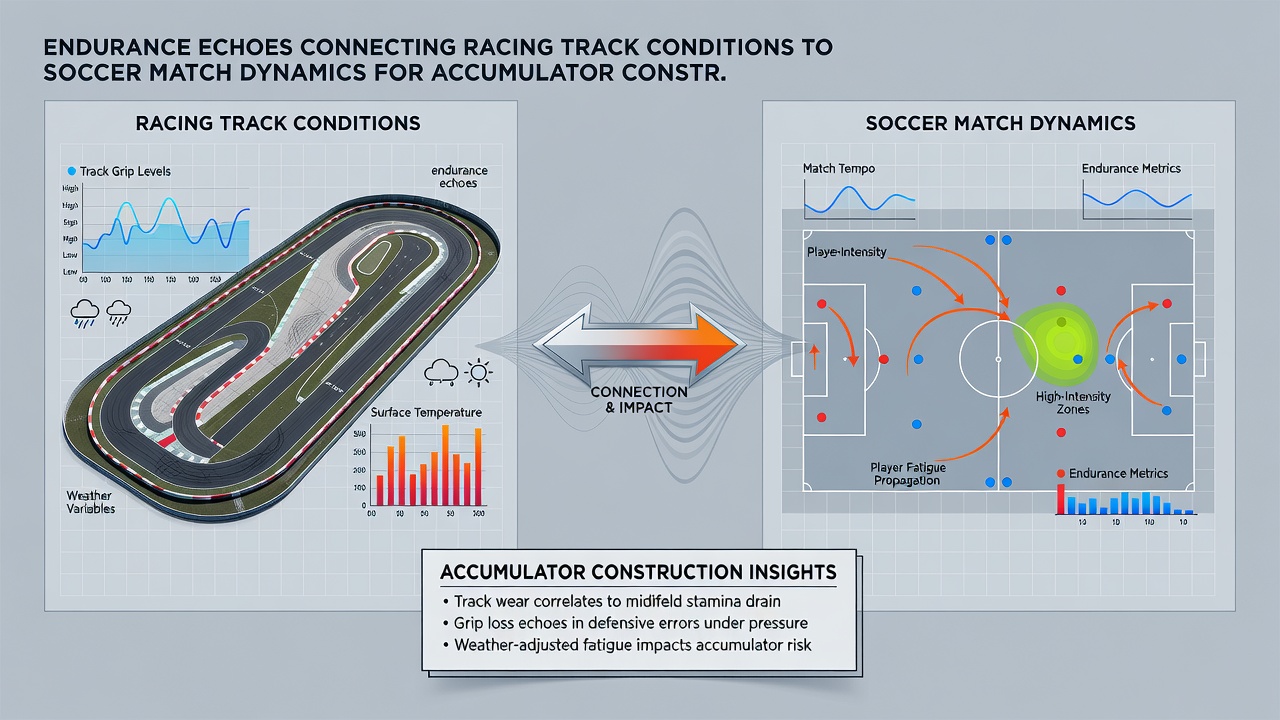
Those constructing accumulators incorporate these parallels by weighting selections toward horses proven on softer surfaces and soccer sides with strong late-game records under demanding pitch conditions. The approach narrows the candidate pool while preserving the multi-leg structure typical of accumulator construction. Industry reports from the European Gaming and Betting Association indicate that operators have expanded data feeds to include these dual-sport variables, enabling more precise probability modeling without relying on isolated sport statistics.
Practical Application in Multi-Event Betting Structures
Accumulator builders begin by filtering race entries for horses with verified performances on the projected going, then cross-reference soccer schedules for matches where pitch reports forecast elevated fatigue. This sequential filtering reduces variance across legs because each component draws from the same underlying endurance principle. A study published in the Journal of Quantitative Analysis in Sports examined three seasons of combined racing and soccer results and found that endurance-aligned selections produced a measurable improvement in hit rates compared with random multi-sport combinations.
Weather forecasts issued 48 hours before events further refine these selections, since both racing tracks and soccer pitches respond rapidly to precipitation changes. Operators in North America and Oceania have adopted similar models, linking public track and pitch condition updates to automated accumulator tools that highlight compatible fixtures. The result appears in tighter clustering of outcomes around expected stamina margins rather than broad statistical spreads.
Conclusion
Endurance metrics derived from racing track conditions supply a consistent framework for evaluating soccer match dynamics, allowing accumulator structures to draw from shared physical principles across the two sports. Continued collection of standardized surface data supports ongoing refinement of these connections, with regional authorities maintaining public records that facilitate broader application. The pattern holds across different climates and competition calendars, offering a stable basis for constructing selections that reflect real-world performance constraints.